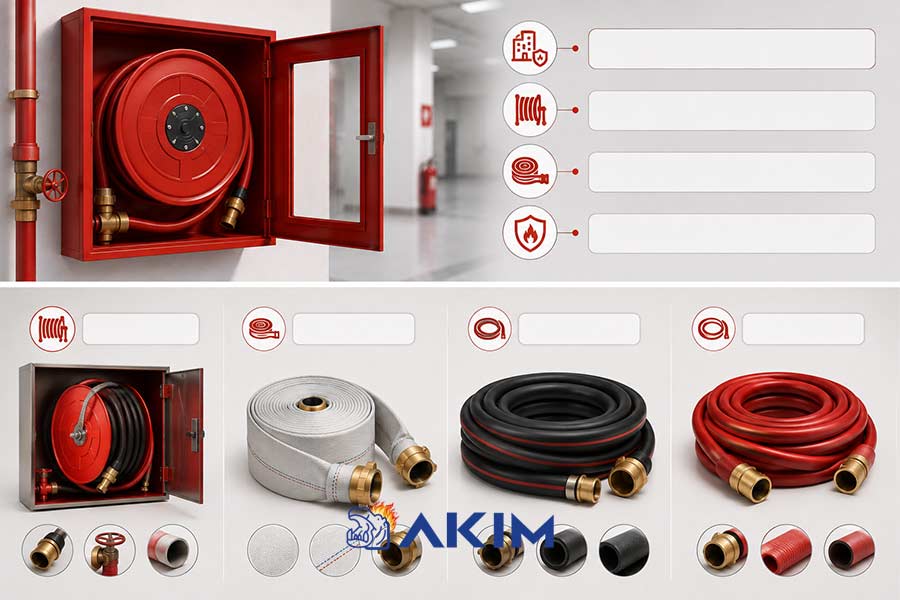
One of the primary pieces of equipment used to ensure that the initial response to a fire can be carried out quickly, in a controlled manner, and safely is the Fire Hose. Used in various settings ranging from fire hose cabinets and firefighting vehicles to industrial facilities and commercial buildings, fire hoses differ in terms of their construction, intended use, diameter, length, and operating pressure. Selecting the right hose directly affects not only the speed of fire intervention but also the safety of the operation and the efficient performance of the system.
To select a suitable fire hose, the characteristics of the application area, the capacity of the existing fire protection installation, and the intended firefighting scenario should be evaluated together. It is particularly important that products used in high-rise buildings, manufacturing facilities, warehouses, and technical areas with fire risks comply with the relevant standards.
Types of Hoses by Construction
Types of Hoses by Construction are evaluated according to the physical structure and method of use of fire hoses. Whether a hose is semi-rigid, lay-flat, or manufactured from different materials can provide different advantages in terms of storage, ease of use, pressure resistance, and firefighting applications.
Semi-Rigid (Reel / Cabinet) Hoses
Semi-rigid hoses are hose types commonly used inside fire hose cabinets and stored wound onto a reel. Their ability to be extended to a certain distance without requiring the entire hose to be fully deployed can facilitate initial firefighting intervention.
These hoses are commonly preferred for indoor fire hose cabinets in shopping centers, hotels, factories, schools, and similar buildings. The reel system helps keep the hose properly stored while also making it easier to return the hose to its position after use.
Lay-Flat (Flat / Fabric) Hoses
Lay-flat hoses are designed to fold flat when not in use and occupy relatively little storage space. They are widely used particularly in firefighting equipment and applications requiring high water flow rates.
The flat structure of the hose provides advantages in terms of transportation and storage, but it must be properly unfolded before use. Correct connection of the fittings and laying the hose without kinks are important for maintaining uninterrupted water flow.
Rubber and Thermoplastic Hoses
Rubber and thermoplastic-based hoses can be adapted to different operating conditions depending on the properties of the materials used in their manufacture. Features such as flexibility, abrasion resistance, temperature resistance, and resistance to chemical exposure should be taken into consideration when selecting a product.
Particularly in industrial areas with intensive use, selecting a hose based solely on its diameter is not appropriate. Factors such as the operating environment, expected pressure, temperature, and frequency of use should all be evaluated together.
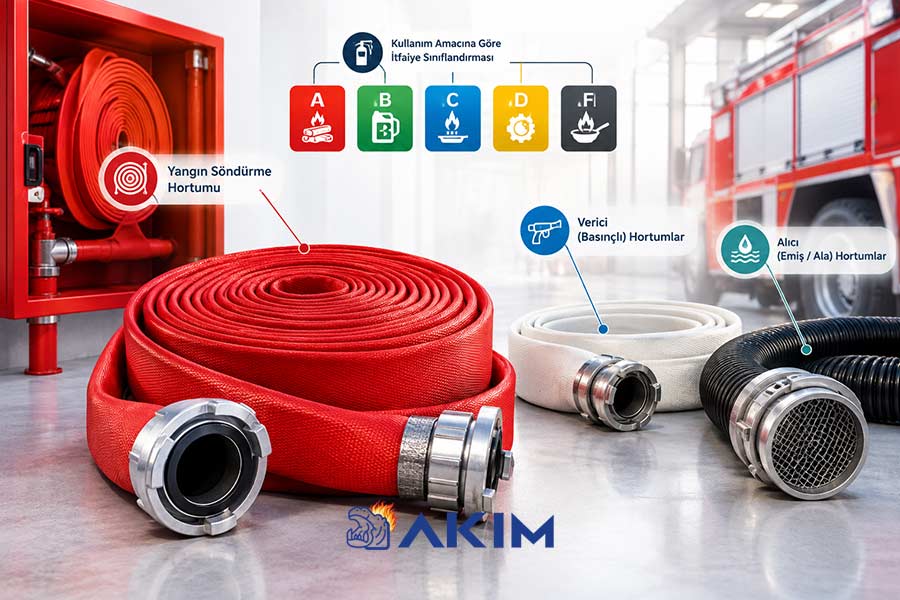
Fire Hose Classification by Intended Use is based on distinguishing hoses according to whether they are used to deliver water to a fire or draw water from a water source. In this context, delivery and suction hoses serve different purposes and should not be used interchangeably.
Delivery (Pressure) Hoses
Delivery hoses are used to convey pressurized water from a pump or fire protection system to a branch pipe, nozzle, or similar equipment. Different types of delivery hoses can be used in firefighting vehicles, fire hose cabinets, and various fixed or mobile fire suppression systems.
Selecting these hoses according to their operating pressure is critical. A hose operated above its pressure rating or one that has been physically damaged can cause serious safety problems during firefighting operations. For this reason, connections, the outer surface, and the overall physical condition of the hose should be inspected before use.
Suction (Intake) Hoses
Suction or intake hoses are used to draw water from a water source into a fire pump. These hoses have a different construction from delivery hoses used to transport pressurized water.
Suction hoses must be resistant to the vacuum that can occur during water intake, and their connections must also be properly secured. Factors such as the water source, pump capacity, suction lift, and hose length play an important role in the efficient operation of the system.
What to Consider When Selecting and Using a Fire Hose
What to Consider When Selecting and Using a Fire Hose is not limited to the purchasing stage. The hose's compatibility with the system, installation, method of use, and periodic inspection should all be addressed together to ensure the expected performance during a fire emergency.
Standards Compliance
Compliance with applicable standards is one of the fundamental criteria for the reliability of fire safety equipment. The hose to be used must meet the relevant technical requirements and have characteristics suitable for its intended application.
Particularly in commercial and industrial facilities, rather than selecting a product based solely on dimensions without examining the existing fire protection installation, it is more appropriate to evaluate the system as a whole. Professional product selection can also help prevent compatibility issues that may arise in the future.
Length and Diameter
Hose length and diameter are directly related to the distance over which water needs to be delivered and the flow rate that the system can provide. A hose that is unnecessarily long or incompatible with the system capacity may create difficulties during firefighting operations.
For this reason, the location of the fire hose cabinet, system pressure, building geometry, and the area expected to require intervention should be taken into consideration. Particularly in large production areas or high-rise buildings, it is important for the required technical specifications to be determined by a qualified professional.
Proper Firefighting Intervention
Using a fire hose correctly is just as important as the technical specifications of the equipment. When deploying the hose, care should be taken to prevent sharp kinks, ensure that connections are properly secured, and operate the branch pipe in a controlled manner.
Keeping the area in front of fire hose cabinets clear and ensuring easy access to the equipment can also reduce response time. During a fire emergency, following predefined emergency procedures rather than acting in panic is important for safe intervention.
Periodic Maintenance
Fire hoses should be inspected even when they are not in use. A hose stored inside a cabinet for an extended period may develop cracks, deformation, connection problems, or material deterioration.
During periodic inspections, the physical condition of the hose, its connections, reel, valve, and other complementary equipment should be evaluated together. Any identified damage should be repaired without delay, and equipment whose safety during use is questionable should be appropriately replaced.
Proper Hose, Safe Initial Response
Every second matters during firefighting operations. Therefore, the hose used must not only be of suitable quality but also be correctly positioned within the appropriate system. Selecting the right hose based on the building's intended use, fire risk, fire protection installation, and required intervention distance can contribute to the effective use of the equipment during an emergency.
Akım Yangın ve Güvenlik Sistemleri offers products and applications designed to meet different needs in fire suppression equipment and fire protection solutions. You can contact our expert team for detailed information about fire hose cabinets, hoses, reels, and other fire safety equipment, to determine the appropriate solution for your project, or to assess the requirements of your existing system.
Contact Akım Yangın today to select the right equipment and let us evaluate the fire safety solution that best meets the needs of your building.
Free Project Analysis
We provide customized solutions tailored to your needs, together with competitive quotations and professional support from our expert team, as quickly as possible.