


Fire Suppression Solutions
Kitchen Hood Fire Suppression Systems
In restaurants, hotels, cafeterias, catering companies, and commercial kitchens, fire risks should be carefully assessed, particularly around cooking equipment and kitchen hood systems. Hot cooking oils, stoves, fryers, and equipment operating under high temperatures can cause fires that become difficult to control within a short time. Kitchen hood fire suppression systems are specialized fire safety solutions designed to provide rapid and direct intervention in these high-risk areas.
Kitchen hood fire suppression systems are designed to detect fires that may occur in cooking areas and discharge specialized extinguishing agents toward designated points. When required, they can also help shut off fuel or electrical sources. With proper system design and regular maintenance, these systems contribute to establishing a more controlled fire protection infrastructure for businesses.
Operating Principle
The operating principle is important for understanding how the system activates during a fire and the stages involved in the extinguishing process. The system is generally designed to detect excessive heat in high-risk areas around cooking equipment and inside the kitchen hood.
Heat Detection
The detection mechanism installed above the cooking line responds when a fire or excessive heat reaches predetermined temperature levels. The layout of the detection line should be planned according to the type of equipment being protected and the configuration of the kitchen.
Automatic Activation
The system can activate automatically when the detection mechanism is triggered. Once a fire is detected, the extinguishing agent in the suppression cylinder is discharged through the piping system to the designated nozzles. Automatic activation is intended to enable early intervention before the fire develops further.
Chemical Discharge
Specially designed nozzles direct the extinguishing agent toward fryers, stoves, grills, and other areas containing high-risk cooking equipment. The extinguishing agent used is formulated to help control fires caused by cooking oils and other flammable substances commonly found in commercial kitchens.
Blanket Effect
The extinguishing agent forms a layer over the burning surface, helping to reduce contact between the fire and the surrounding air. This effect plays an important role in controlling the risk of re-ignition.
Main Components
The main components consist of the equipment required for the kitchen hood fire suppression system to operate reliably. Each component must be selected correctly and positioned according to the specific kitchen equipment and areas being protected.


Suppression Cylinder
The specialized extinguishing liquid used in the system is stored in cylinders with specific capacities. The required cylinder capacity is determined according to the number of protected appliances, the size of the kitchen hood, and the overall scope of the fire risk.
Detection Line
The detection line is one of the key components that activates the system in the event of a fire or excessive heat. Automatic system activation can be achieved using tension cables, thermal elements, and other mechanical components.
Nozzles
Nozzles ensure that the extinguishing agent reaches the correct locations and is discharged effectively. The number and placement of nozzles may vary depending on the type of cooking equipment being protected. Therefore, installation should be carried out according to the approved project rather than through a standard or arbitrary application.
Manual Discharge Button
In addition to automatic activation, manual activation equipment may be provided to allow the system to be triggered by the user when necessary. The manual discharge button should be positioned at an easily accessible location while preventing accidental activation.
Legal Regulations and Mandatory Requirements
Legal regulations and mandatory requirements are among the most frequently considered issues when businesses invest in kitchen fire safety. The building's occupancy classification, building height, kitchen equipment, and applicable fire safety requirements may affect the type of system to be installed.
Taking the necessary fire safety measures is particularly important for kitchens located in high-rise buildings as well as commercial and communal-use kitchens. During fire department compliance assessment processes, the fire safety infrastructure of the business may also be evaluated within the framework of current legislation and applicable requirements.
Therefore, rather than adopting a general approach that “the same system is mandatory for every kitchen,” the characteristics of the building and its specific conditions of use should be assessed. Conducting an on-site inspection by a qualified team before the project begins can help prevent potential deficiencies during subsequent stages.

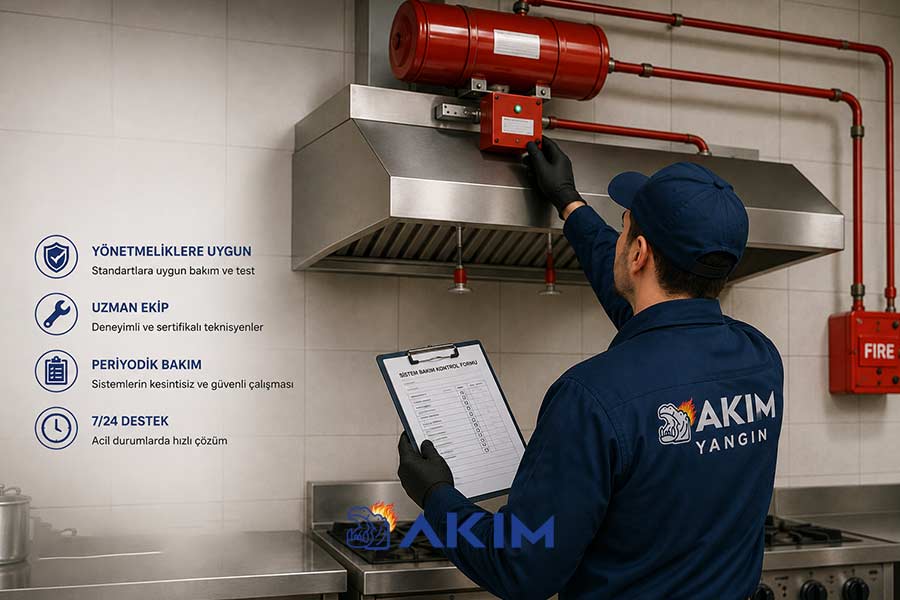
Operating Principle: How Does It Work?
Under the heading “Operating Principle: How Does It Work?”, the system’s intervention process during a fire can be summarized in three main stages.
1. Detection (Thermal Activation)
The high temperature generated during a fire triggers the thermal detection elements within the system. Depending on the system design, different mechanical or detection methods may be activated at this stage. Detecting the fire at an early stage contributes to a more effective extinguishing process.
2. Foam and Blanket Effect
When the system is activated, the extinguishing agent is discharged through designated nozzles onto the cooking surfaces and other required areas. The extinguishing liquid forms a protective layer over the cooking oil, helping reduce contact with oxygen while also contributing to the cooling of the heated surface.
3. Energy Shut-Off
Depending on the system configuration, the power or fuel supply to the relevant equipment can be shut off during a fire. This helps control the sources that may continue to fuel the fire. Proper integration of these functions is important for the overall fire protection performance of the system.
Main Components of the System
The main components of the system consist of equipment that works together to ensure that the extinguishing process is carried out as planned.
Extinguishing Agent and Storage Cylinder
The extinguishing agent is stored under pressure in cylinders suitable for the system capacity. The required quantity is determined according to the characteristics of the cooking equipment being protected and the technical specifications provided by the system manufacturer.
Detection Line (Tension Cable and Fusible Links)
The tension cable and thermal fusible links can mechanically trigger the system when predetermined temperature levels are reached. Proper positioning and periodic inspection of these components are important for system reliability.

Discharge Nozzles
Proper positioning of the nozzles ensures that the extinguishing agent reaches the equipment where the fire risk is present directly. Different nozzle configurations may be required for kitchen hood ducts and cooking equipment.
Manual Activation Button
If a fire is detected, the user can manually activate the fire suppression system using the manual activation button, in accordance with the system design. Positioning this equipment in a visible and easily accessible location is important for rapid intervention during emergencies.
Standards and Their Importance
The importance of standards demonstrates that kitchen fire suppression systems should not be considered solely as equipment installation. The structure of the protected kitchen, the types of cooking appliances, the kitchen hood and duct system, and the technical characteristics of the fire suppression equipment used should be evaluated together.
The suitability of the products used in the project, the system design criteria, installation quality, and commissioning tests are directly important for fire safety. Applicable legislation, current fire safety regulations, international standards, and the manufacturer's technical documentation should also be taken into consideration.
An installation carried out in accordance with the applicable standards aims not only to ensure that the system is installed correctly, but also that it operates as expected when needed. Therefore, it is essential that the site assessment and project design stages are carried out by qualified professionals.
Important Maintenance and Certification Considerations
Important maintenance and certification considerations cover the issues that should be taken into account to ensure that the system remains reliable over the long term. Completing the install

Periodic Maintenance
The suppression cylinder, detection line, nozzles, connection components, and manual activation equipment should be inspected regularly. Changes to kitchen appliances, modifications to the kitchen hood, or the addition of new equipment may affect the protection coverage of the existing system.
Therefore, maintenance should not be limited to checking the suppression cylinder. It should also be assessed whether the system still provides adequate protection for the entire designated area.
Compliance with Standards
During maintenance and inspections, the system should be reviewed for compliance with the project criteria, manufacturer’s instructions, and applicable standards. Working with certified and technically qualified teams provides an important advantage for the long-term reliability and sustainability of fire safety systems.
Don’t Leave Your Kitchen Fire Safety to Chance
In professional kitchens, a small cooking oil fire can quickly turn into a serious business loss if the appropriate fire suppression system is not in place. Therefore, an on-site assessment of the facility is essential for determining the most suitable solution.
At Akım Yangın, we provide professional solutions throughout the site assessment, project design, installation, commissioning, and maintenance processes. To learn more about kitchen hood
Free Project Analysis
We provide customized solutions tailored to your needs, together with competitive quotations and professional support from our expert team, as quickly as possible.


